

16.9.2026
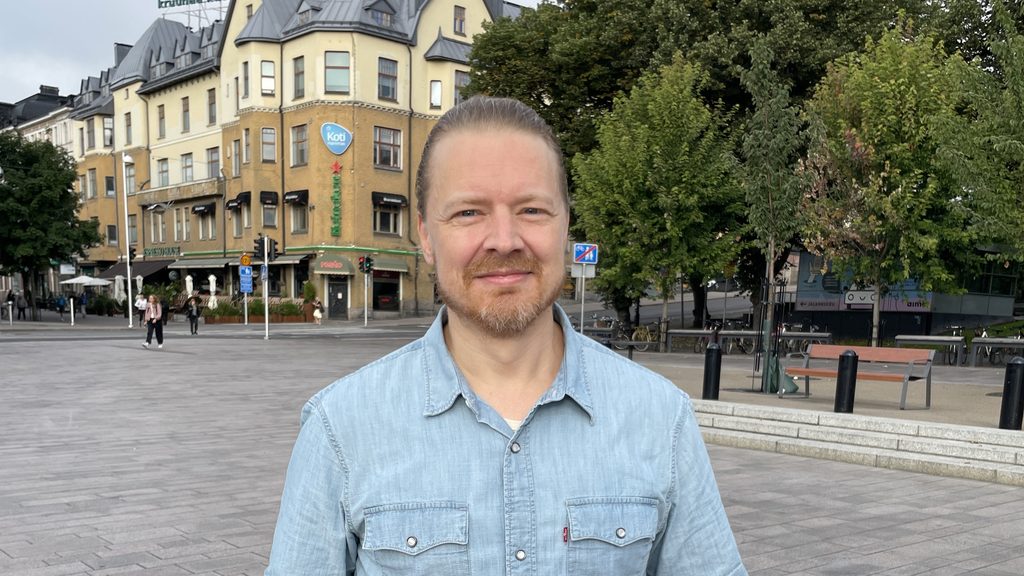
When Tommi Hakala first noticed an open position at Helsinki Shipyard, he almost passed it by. The role appealed to him, but commuting daily from Turku to Helsinki did not.
Then he spotted a critical detail: the job was based in his hometown of Turku.
“I nearly missed the opportunity because I didn’t know Helsinki Shipyard had a Turku office,” Tommi says. “Once I saw that, it changed everything.”
Today, Tommi works as a Lead Designer in HVAC at Helsinki Shipyard’s Turku office. He coordinates HVAC engineering throughout vessel projects, connecting his discipline with other design teams, project management and production.
Seeing the project through
Before joining Helsinki Shipyard, Tommi had spent much of his nearly 20-year engineering career in ship design consultancies. His background also includes power plant engineering and subcontractor coordination.
What he particularly values at Helsinki Shipyard is the opportunity to stay with the vessel through different phases of the project.
“You see the ship take shape and you stay connected to the process,” Tommi explains. “You follow what happens next and see how the solution works in practice.”
As HVAC Lead Designer, Tommi is responsible for keeping his discipline moving in step with the wider vessel design. That means understanding not only the technical solution itself, but how it connects with other systems, production and the overall project.
“The first time you enter a space you have been designing, your understanding expands immediately,” Tommi says. “After that, you look at the next design differently because you know what it will eventually become.”
That feedback becomes experience you carry into the next project.
Cross-disciplinary collaboration
The connection to production also shapes the way people work. When a question comes up during construction, designers and production can look at the issue together and find a practical way forward.
“You discuss it, listen to the different perspectives and solve it together,” Tommi says.
That directness is part of a wider culture Tommi has noticed at Helsinki Shipyard: there is a lot of responsibility, but when faced with challenges, no one is left alone. The same applies across disciplines. Shipbuilding is too complex for any one team to work in isolation, and that collaboration is visible every day. People from machinery, HVAC, electrical, interior, hull and deck outfitting design all work alongside each other.
“We all sit together,” Tommi says. “There are no invisible boundaries. Information moves naturally, and you hear what is happening elsewhere in the project.” That means easier access to the expertise needed to understand the whole vessel and make better engineering decisions.
Designing from Turku
Around 40 design professionals work at Helsinki Shipyard’s Turku office as part of a wider Ddesign organization of over 200 people. The office covers both basic and detail engineering across the main disciplines, with senior design leadership also based in Turku. Together, Helsinki Shipyard’s offices in Helsinki and Turku are one of the biggest ship design and engineering offices in Finland.
Most importantly, working from Turku feels fully integrated with the rest of Helsinki Shipyard. “There is no barrier between the locations,” he says.
He travels to Helsinki when the project requires it, but most of his day-to-day work happens in Turku. Who he works with depends on the vessel and the task at hand, not on where people are based. For designers in the region, that means the Turku office is not a separate unit, but part of the same Design organization working on the same vessels.
Inside the HVAC team: responsibility and room to grow
Tommi is currently working on Helsinki Shipyard’s Arctic Security Cutter program for the United States. The work is technically demanding, schedules can be tight and the vessels themselves are highly specialized. At the same time, the projects are structured so individual engineers can stay closely involved without becoming disconnected from the rest of the vessel.
Design Director Arttu Stenberg has described them as human-sized projects: large enough to be challenging, but compact enough that people know who they are working with, take real ownership and understand how their own area connects to the wider project.
Tommi recognizes that in his own work. Even after almost 20 years in engineering, he is still learning. He now sees more of what happens before and after his own design work. There is also a certain confidence in the way difficult problems are approached.
“There is a lot of experience here,” Tommi says. “Even when things are demanding, there is an understanding that we have solved difficult problems before, and we will solve them again.”
For him, that combination matters: complex engineering, meaningful ownership and a strong base of experience around you.
Tommi highlights the strength of the HVAC team and the opportunities to develop within the team and the shipyard. New team members are trusted early on, but they are not left to figure things out alone.
A different opportunity for Turku’s designers
Helsinki Shipyard offers experienced engineers in the region a different way to work on demanding shipbuilding projects, with broad expertise close at hand, real responsibility and a base in the heart of Turku.
Interested in joining Helsinki Shipyard in Turku? Explore our open positions in HVAC and ship systems design.
HVAC Designer/LVI suunnittelija
Fire Extinguishing System Designer (ends 30.9.)