

31.8.2026
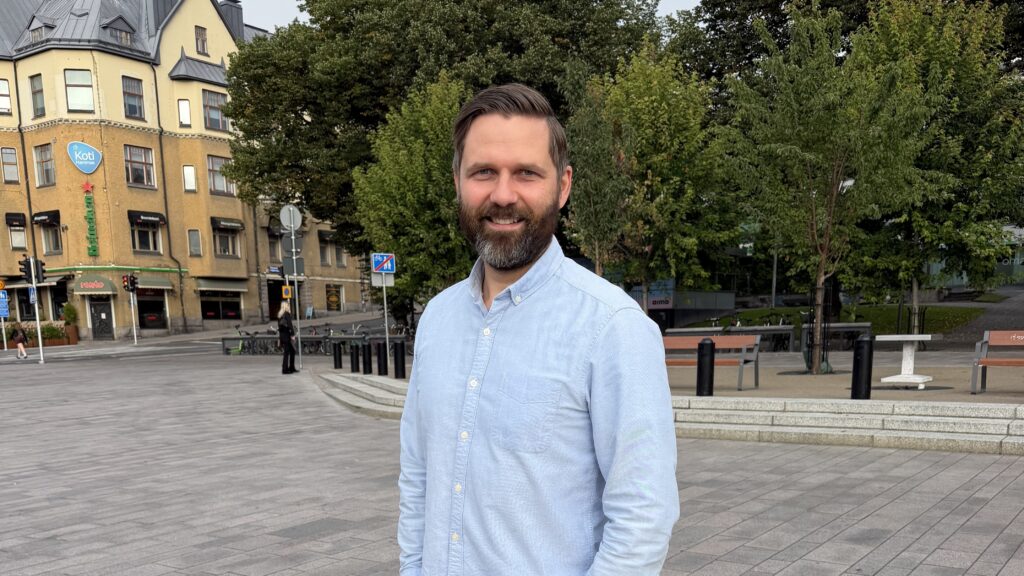
Arttu Stenberg has always been drawn to massive machines. Today, as Design Director for Helsinki Shipyard, he leads a Design organization of around 160 professionals working on some of the world’s most demanding vessels and an increasingly international portfolio of projects. He does it all from his hometown of Turku.
For Arttu, an interest in shipbuilding started early. Growing up in Turku, the sea was always nearby. Childhood sailing trips and a teenage visit to the local shipyard left a lasting impression.
“I’ve always liked big machines. Ships are the biggest there are: you talk in megawatts and tonnes, not millimeters and milliamps,” Arttu says. “At eighteen, I walked onboard a big cruise ship during an open day and just thought: wow. They’re building these right here, right next to home.”
That curiosity led him to study Naval Architecture at Aalto University before beginning his career in machinery systems design. After gaining experience at a design agency and another shipyard, he eventually returned to Helsinki Shipyard, where he now serves as Design Director.
Across every role, one defining preference stayed the same: Arttu wanted to work where ships are actually built.
“You get a different kind of ownership over your work,” he explains. “You can visit production, solve issues together with the production teams, and see your engineering decisions become part of a real ship.”
Bringing Helsinki Shipyard’s Expertise to the Heart of Turku
In 2024, Helsinki Shipyard offered Arttu an interesting proposition: establishing the company’s new office in Turku.
“I already knew the people and the company,” Arttu recalls. “The chance to build something new, to set up an office in my own hometown, was a unique opportunity.”
What started as a new venture has quickly become an integral part of the Design organization. Less than two years later, over 40 professionals work from the Turku office, located right in the city center.
Today, the Turku hub houses critical expertise across different disciplines, including machinery, HVAC, electrical, interior, hull, and deck outfitting design, handling both basic and detail engineering.
“Honestly, it exceeded all our expectations,” Arttu says regarding how naturally the Turku office has integrated into the wider organization.
“Human-Sized” Projects
When discussing what attracts engineers to Helsinki Shipyard, Arttu points to one key factor: variety. The projects are relatively compact by shipbuilding standards, with a typical project running for around three years from design to delivery. Over the course of a career, that creates opportunities to contribute to multiple projects, work on different vessel types and encounter new engineering challenges.
The vessels themselves add another layer of variety. Helsinki Shipyard is internationally recognized for its icebreaker expertise, where designing for extreme conditions requires highly specialized know-how.
“It’s a genuine niche. Very few shipyards in the world design vessels like these.”
At the same time, the scale of the projects keeps the work surprisingly personal.
“Our projects are human-sized. You get responsibility, you know the people you’re working with, and you get to see several types of vessels during your career.”
Alongside its globally recognized icebreaker expertise, Helsinki Shipyard also designs and builds passenger and governmental vessels. This breadth of projects gives engineers the opportunity to work across different market segments, technologies and customer needs, ensuring that no two projects are quite alike.
“The vessels are all different,” Arttu notes. “Every project teaches you something new.”
Global opportunities, grounded culture
Helsinki Shipyard is now part of a five-yard group spanning Finland (Helsinki and Pori), Canada (Québec), and the United States (Texas). The role of the Design organization is expanding right alongside it.
Helsinki and Turku teams are supporting the group’s operations in all three countries.
“In the coming years, we will increasingly provide ship design support across the whole group,” Arttu says and continues: “We can genuinely offer international careers.”
Yet, despite this global reach and rapid growth, the culture remains distinctly grounded.
“Shipbuilding is incredibly complex. No single person designs a ship alone,” Arttu reflects. “There’s humility in the face of how complex these projects are. Nobody turns a ship around alone; you do it together. That team spirit is something you notice every day.”
Why now?
For experienced marine engineers in Turku and beyond, this is a particularly interesting moment to join. We have a strong order base for upcoming years, with interesting vessel projects ongoing and starting. The Design organization is expanding, and the Turku office continues to grow.
“People joining now have a real opportunity to influence how we work.”
For Arttu, that’s part of what makes the coming years so interesting: there is plenty already underway, but still plenty left to build.